
What Happens During a Full Body Skin Exam?
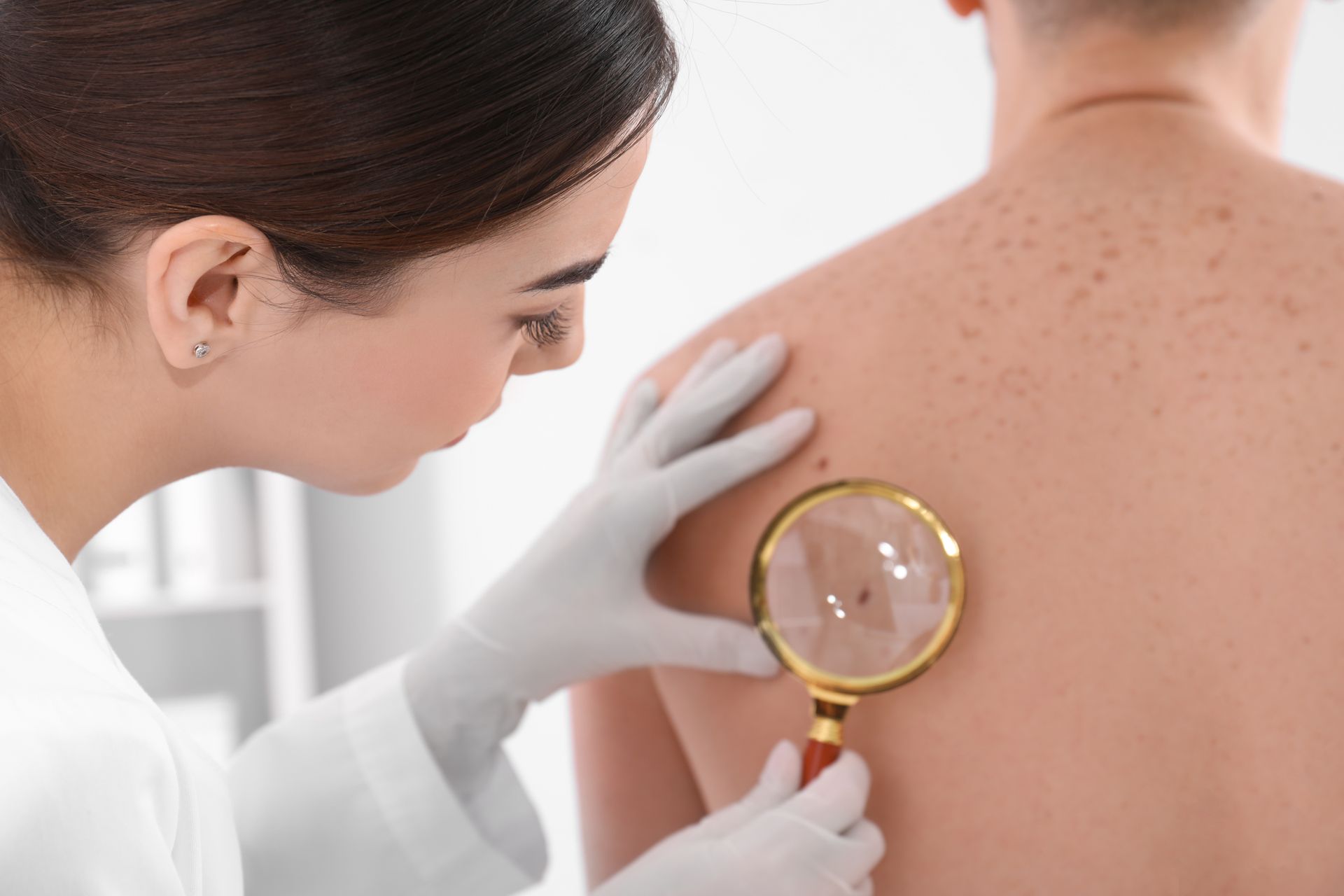
At Pine Belt Dermatology & Skin Cancer Center it is understood that having regular skin examinations is an important factor in keeping your skin healthy and in detecting any possible problems as early as possible. A full-body skin examination, which is also known as a full-body skin check, enables a dermatologist to thoroughly assess your skin all the way from your head to your toes for any unusual moles, growths, discoloration or other changes.
If patients know what to expect when having a skin exam they will feel more at ease and be better prepared for their appointment.
What Is a Full Body Skin Exam?
A full-body skin examination is a complete review of the skin carried out by a dermatologist, who looks for any signs of skin cancer, dubious moles, lesions that are changing, and other skin conditions during the exam.
Your dermatologist might suggest that you have your skin checked regularly, depending on your medical history, skin type, and risk factors.
What Happens During a Skin Exam?
A complete skin examination of the body is usually simple and does not require any special preparation. While you are being seen, your dermatologist might:
• Go over your skin and medical history: Your dermatologist might want to know about any previous skin conditions, your history of skin cancer, your exposure to the sun, your family history, and any changes that you've noticed.
• Examine your skin from head to toe: The dermatologist carefully examines areas throughout the body, including the scalp, face, neck, arms, legs, back, chest, and other areas of skin.
• Examine the moles and growths: Your dermatologist will look at moles, freckles, spots, and other growths for any characteristics that may require more investigation.
• A dermatoscope should be used: this specialized instrument offers magnification and lighting which allow a dermatologist to examine particular areas of the skin more closely.
• If a spot seems suspicious, your dermatologist might suggest that it be closely monitored, that photographs be taken for comparison, or that a biopsy be carried out.
The exam is usually short, though the length can differ according to the number of positions or issues to be evaluated.
What Should You Tell Your Dermatologist?
Tell your dermatologist about any new or changing moles, odd spots, sores that do not heal, or areas that bleed, itch, or hurt before or during the full-body skin examination.
It may also be useful to refer to any personal or family history of skin cancer and to any substantial sun exposure. This information gives your dermatologist the context needed to assess your skin.
Why Are Regular Skin Exams Important?
A screening for skin cancer can pick up any suspicious changes before they have had a chance to become more advanced. Although a great many moles and skin growths are not dangerous, some of the changes may need to be looked at more closely.
Routine visits to a dermatologist also give you the chance to address other skin problems, such as acne, eczema, rashes, and signs of sun damage.
People with certain risk factors may find it helpful to have their skin examined more often. Your dermatologist can suggest a screening program based on your circumstances.
Protecting Your Skin Between Exams
Healthy skin can be maintained in another way besides having regular skin screenings. Between visits, you should protect your skin by applying sunscreen, wearing protective clothing, seeking shade, and avoiding overexposure to the sun.
It's also important to get to know your skin so you can spot any new spots or changes and have your dermatologist evaluate them.
Take the Next Step for Your Skin Health
A complete skin examination is a simple way to have your skin professionally assessed and to monitor any changes that may need more attention. If you know what to expect, the process will be easier and will help you take an active approach to your skin health.
At
Pine Belt Dermatology & Skin Cancer Center, we offer thorough dermatological care and skin cancer screenings to help our patients keep their skin healthy. If you notice a changing mole, an odd spot, or another skin concern, our team will examine your skin and advise you on what to do next.