Lip Licker's Dermatitis | Pinebelt Dermatology, MS
Lip Licker's Dermatitis | Causes, Diagnosis & Treatments
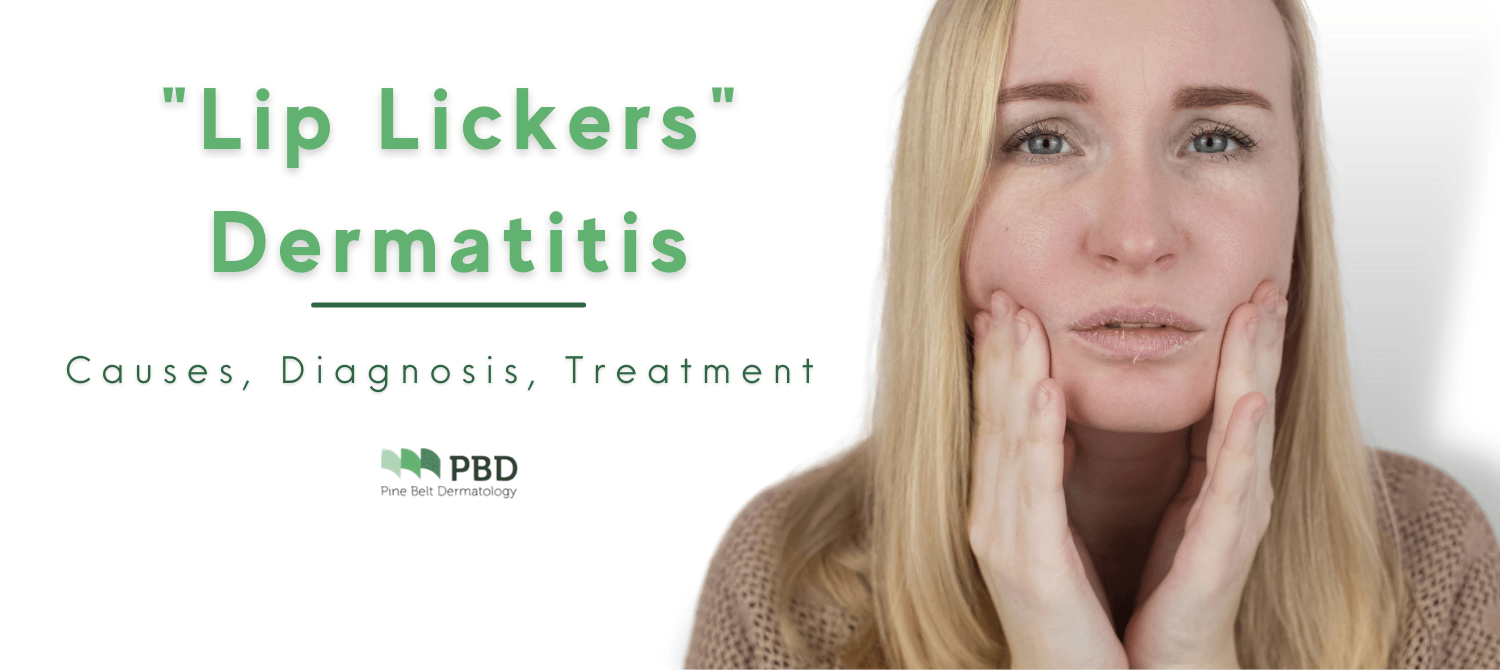
The delicate skin of your lips and the surrounding area can be highly susceptible to a variety of irritants. Cold, dry weather can affect lip skin health as can allergens in the air and certain foods, but one of the most potent irritants to your lips could be coming from your own body in the form of your saliva.
Persistent exposure to the moisture found specifically in your saliva can cause damage to the skin in the form of lip licker’s dermatitis causing localized pain and itching and even potential infections.
Seeking the help of qualified dermatologists at Pine Belt Dermatology in Mississippi is the first step to healing the problem.
Lip Licker’s Dermatitis—What Is It?
Lip licker’s dermatitis, also called lip lick contact cheilitis, looks like a form of eczema on the lips. In this condition, the repeated moistening and drying cycle created by lip licking and your saliva causes the skin to inflame. The tissue on and around the perimeter of the lips becomes red, dry, irritated, inflamed, and cracked. The inflammation brings with it a painful often itching sensation that is exacerbated by more lip licking in an attempt to remedy the discomfort.
In most cases, the chapped, painful area does not extend into the deep corners of the mouth, but it could grow to encompass any area of the lips and surrounding skin that can be touched by the tongue. Although lip licker’s dermatitis is most prevalent in cold winter months, it can be a problem for some individuals year-round depending on the specific cause of the lip licking.
What Are Some Causes of Lip Licker’s Dermatitis?
As illustrated by the condition’s name, the cause of the irritation is the excessive licking of the lips. This habit removes the moisture-protecting oily top layer on the lips. The rapid cycle of wetting and drying eventually causes irritation. However, finding the reason for repeated lip licking can be a bit tricky. Environmental factors come into play as well as behavioral issues, so both should be considered when analyzing the root problem.
If you are prone to having chronically dry lips, that could be the source of your lip licker's dermatitis problem. Whether the dryness is brought on by a physical issue or is a consequence of living and working in a dry or excessively cold environment, those dry lips need moisture. If you don't provide them with hydration or lip balm, lip-licking can become an unconscious habit.
Certain medications may also cause your lips to feel excessively dry and uncomfortable. If you are currently taking any sort of medication, whether the drug is topical or oral, be sure to check the fine print for side effects such as dry lips. If the drug is necessary and there are no alternatives, ensure proper moisturizing for your lips while you are using that medication.
Some types of behavioral issues can lend themselves to persistent lip licking. Nervous habits, physical tics, and other cognitive issues can often manifest themselves in this form of habitual behavior.
Are Some People More Prone to Lip Licker's Dermatitis?
Again, anyone who can lick their lips can develop this skin problem, but some individuals are more prone to developing lip licker's dermatitis than others.
For example, some people who struggle with anxiety may develop certain physical coping mechanisms, such as unconscious lip licking, to deal with anxious feelings. The individual may or may not even be aware of the problem. In these instances, some sort of behavioral intervention may be required to completely remedy the issue.
Also, small children often have difficulty regulating this behavior when they find their lips to be uncomfortable or dry, so the chafing and cracking around their lips can quickly become a persistent problem. Impaired elderly individuals and adults with mental disabilities are also very prone to persistent lip licking and often suffer from some form of rash or dermatitis on the lips.
In a much more specific category, musicians that play wind instruments may be more susceptible to lip licker’s dermatitis than others due to the constant application of moisture to the lips while playing the instrument. Again, getting a solid diagnosis from a quality dermatologist like the ones at Pine Belt Dermatology in Mississippi will be the key to discovering the underlying problems and finding a solution.
Diagnosing Lip Licker’s Dermatitis
A visit to your local dermatologist will help you secure the most accurate diagnosis and help you set a course for better lip health. Your doctor will likely do a basic visual examination of the skin of the lips and the surrounding area first. Most patients who suffer from lip licker’s dermatitis will present with a visible red ring around the mouth area as well as chafed, chapped, and red lips.
Your doctor may also want to ascertain how long the irritation, pain, and redness have been a problem. This includes how often it happens. This could help steer the course of action in determining if the problem is a newer occurrence or more of a chronic issue.
Your doctor may also want to discuss some of your basic lifestyle and hygiene habits to determine if any of those factors play into the problem. They may recommend some outside sources or methods to help you deal with stress and to break any persistent lip-licking habit you may have.
Finally, your doctor will want to rule out any other forms of irritation such as an allergic reaction. Dermatitis caused by various allergies can masquerade as lip licker's dermatitis, so your doctor may feel it necessary to perform some simple skin tests to determine if an allergen is a culprit rather than excessive moisture due to lip licking.
How Is Lip Licker's Dermatitis Treated?
Is lip licker's dermatitis curable? Yes, but the only way to fully resolve it is to minimize the practice throughout the day. This can be accomplished in several ways, and your dermatologist will be able to walk you through several options for reaching your lip health goal.
The simplest step toward healing will be to keep lips moisturized with a lip balm throughout the day to minimize the desire to lick the lips. Petroleum jelly or other basic lip emollient applied at regular intervals can help keep your lips moisturized and protected from irritants such as saliva and environmental factors. Be sure to use a balm with an added sunscreen for extra protection.
In more severe cases, a topical steroid ointment may be necessary to hasten the healing of the lips and the chapped skin surrounding the lips and to reduce painful inflammation. Check with your doctor for prescription-strength options that may be a good fit for you.
Beyond the physical healing elements, your doctor may want to discuss working to resolve any behavioral issues that are contributing to the problem. Persistent lip-licking as a stress reducer or nervous action may require intervention from outside psychological experts and other sources to fully resolve the problem on a more permanent basis. Your doctor should be able to point you in the right direction for this sort of additional assistance.
Additional Conditions That May Look Like Lip Licker's Dermatitis
While lip licker's dermatitis is a common condition and is often easily diagnosed, several other skin issues may masquerade as lip licker's dermatitis. Finding the root cause of the problem and getting an accurate diagnosis will lead to a quicker resolution.
Periorificial dermatitis can sometimes look like lip licker's dermatitis but is often not confined to the mouth area. This condition produces red papules on the lower portion of the face and may be caused by a variety of factors such as nasal spray irritation, fungal infection, bacterial infection, rosacea, and many other irritants.
Allergic contact cheilitis, on the other hand, also occurs on the lips and creates a rash similar to eczema that is often mistaken for lip licker's dermatitis. This sort of reaction can be caused by an allergic reaction to something like toothpaste, certain foods, or medication. Again, your doctor may want to perform a few allergy tests to rule out this possibility of an allergic reaction before starting treatment.
If you know yourself to have a lip-licking habit and are experiencing chapped, chaffed, red and irritated lips, the best way to remedy the situation will be to visit your doctor for a proper diagnosis and to lay out the most effective course of treatment. Our dermatologists at Pine Belt Dermatology in Mississippi are ready to serve you and help you get your skin back to looking and feeling its best. Reach out to us today to set up an appointment.