Laser Hair Removal: Benefits, Side Effects, Results | Pinebelt Derm, MS
From waxing and shaving to depilatory creams, we dedicate a significant amount of our time to removing unwanted body hair. According to a survey, women shave 7,718.4 times and spend about $10,000 on hair removal products throughout their lifetime.
If you’re tired of spending so much time and money on removing body hair, laser hair removal might make a good alternative. Not only is it the most effective long-term solution to excessive body hair, but it also helps you save more time and money in the long run.
To find out if laser hair removal is the right option for you, read on to learn more about the procedure, its benefits, disadvantages, side effects, and more.
What Is Laser Hair Removal
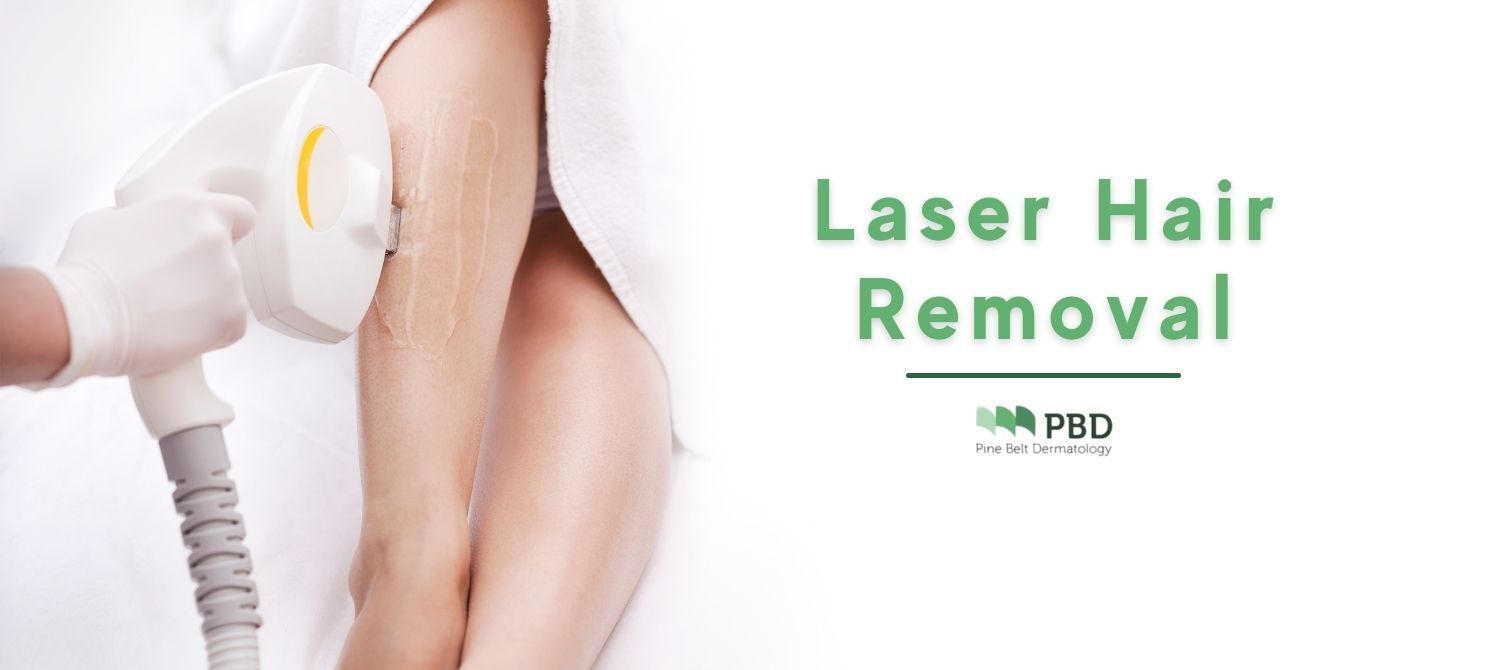
Laser hair removal is a non-invasive medical procedure that will help you get to the root of your body hair problem. During this procedure, a laser emits light that is absorbed by the melanin in your hair follicles. This light transforms into heat energy, damaging the roots and preventing further hair growth.
It is important to note that laser hair removal treatment is at its safest and most effective when performed by a board-certified dermatologist. Please be cautious about spas, salons, and other facilities that allow non-medical personnel to carry out the treatment, as this can result in several complications, including permanent scarring.
Advantages of Laser Hair Removal Treatment
Saves Time
This is the fastest way to get rid of unwanted hair. Depending on the treatment area, the procedure time can range from a few minutes to as long as an hour. To put it into perspective, small areas such as the upper lip can be treated in less than a minute, while larger areas like both legs or an average-sized man’s back may take 15 minutes.
Less Painful
Laser hair removal is not as painful as it sounds. Depending on your pain threshold and the area of treatment, you might feel a slight discomfort. Many compare it to a rubber band snapping against your skin. But, as the sessions are quick, most people find it bearable.
The experts at Pine Belt Dermatology use Candela Gentle, which comes with a dynamic cooling device that continuously blasts cold air right where the laser is pointing. This significantly reduces any pain or discomfort you might experience.
More Precise
Laser technology is perfect for people looking to remove small areas of hair because of its incredible precision and ability to target dark, coarse hairs without damaging the surrounding skin. Except for eyelashes, laser hair removal can be performed on any part of the body, including the upper lip, chin, bikini line, and chest.
Long-Lasting Effects
Laser hair removal destroys the hair follicles of actively growing hair. It is difficult for these follicles to regenerate in most body parts, like the underarms, bikini, or lower legs. So most people see permanent, lasting results or at least a significant reduction in hair growth.
The hair follicles need to be in their growing stage to be destroyed entirely—or the hair will continue to grow. So, you might need eight or more sessions to target all the hair follicles while they’re in their growing stage.
Cost-Efficient
Though individual laser treatment sessions are more expensive than individual waxing sessions, they are more cost-effective in the long run. You can save the hundreds of dollars you spend monthly on waxing or razor blade refills.
Benefits of Laser Hair Removal for Your Skin
Avoid Ingrown Hair
Ingrown hair refers to hair that gets trapped under the skin before it leaves the follicle. Sometimes, hairs break off just below the skin when waxing, resulting in ingrown hairs. The more frequently affected areas are the face, neck, armpits, back, chest, and pubic area.
Fortunately, laser hair removal is the best solution. As laser treatment directly targets and destroys the follicle’s ability to grow more hair, it can put a stop to recurring ingrown hair and protect your skin from irritation, pain, infection, and further damage.
Treatment of Vascular Lesions
Non-invasive laser light hair removal treatments like Candela Gentle are also a safe and effective way to treat vascular lesions or spider veins.
Healthier & Softer Skin
Not only does laser hair removal promote healthy cell growth in the treated area, but it also improves the appearance of your skin and makes it more silky smooth. You no longer have to deal with prickly stubbles post hair removal. Even if your hair eventually grows back, it will be thinner, softer, and easier to maintain.
No Scarring
Hair removal methods like threading, waxing, or shaving can be quite painful and even cause scars and bruises. On the other hand, laser hair removal is precise and gets the job done without harming the surrounding skin.
Side Effects
When performed by a board-certified dermatologist, permanent side effects are rare. Some people experience redness, swelling, pigmentation, blistering, and bruising in the treated area—but these side effects don’t last longer than a few days post-treatment.
Redness and Irritation
Your skin might feel tender, and you might even notice a slight swelling after laser hair removal. In most cases, the treated area looks similar to skin that has been waxed or plucked. But, these symptoms are temporary and will subside within a few hours of the treatment.
A cool compress or gel pack can be used to offer additional comfort to your skin post-treatment. You can also take a cold bath to soothe your skin.
Pigmentation
Some people might notice minor color changes in the treated area following laser hair removal. If you have lighter skin, you’re more likely to experience darker pigmentation, and if you have a darker skin tone, you’re more prone to lighter pigmentation.
Fortunately, these changes will fade away with time, and your skin will return to normal.
Skin Infection
The majority of people who choose laser hair removal find it safe and hassle-free. But, as with any other cosmetic hair removal procedure, damaging hair follicles with a laser can increase the risk of infection.
Follow all pre and post-treatment precautions and treat the affected area like it’s sunburned while it heals. If you notice any signs of infection, report to your dermatologist immediately. Don’t use over-the-counter antibiotic cream on the treated area.
Remember, laser hair removal can be dangerous in the hands of an untrained individual. It can even result in burns, blisters, permanent skin color changes, and scars. To reduce infection risk and ensure a smooth procedure, it is advisable to choose a board-certified dermatologist who has experience working with lasers and in-depth knowledge of different skin types.
Side effects can vary with skin type, hair color, treatment plan, and pre and post-treatment care. Talk to your doctor about potential side effects and how to tackle them.
How to Prepare for Laser Hair Removal
Before choosing laser hair removal, it is wise to schedule a consultation with your dermatologist to determine if your hair type and skin color are compatible with laser treatment. You should also discuss risks, benefits, and set realistic expectations of what laser hair removal can do and can’t do for you.
With advancements in laser technology, laser hair removal is now possible for all skin types. However, people with darker skin are more prone to hyperpigmentation. So, it is best to work with a doctor who has more experience performing laser treatment on darker skin tones. Laser treatment also does not work well with blonde, gray, or red hair. This procedure can also stimulate more hair growth for some hair types. But, worry not—your dermatologist will let you know if your hair is not suitable for laser treatment.
Additionally, you must follow your dermatologist’s instructions to prepare your skin for laser hair removal.
1) Avoid sun exposure. Use a broad-spectrum SPF 30 sunscreen whenever you go out.
2) If you have a darker skin tone or a recent tan, your doctor may prescribe a skin bleaching cream.
3) Avoid plucking, waxing, and electrolysis for at least four weeks before the procedure, as they can disturb hair follicles and interfere with the treatment.
4) It is best to avoid blood-thinning medications like aspirin or anti-inflammatory drugs before laser hair removal. Ask your doctor for more information on what medicines you can and can’t take before the procedure.
5) Trim and shave the treatment area before the procedure to minimize skin damage caused by burnt hairs.
Recovery
Though you can immediately return to regular life after a session, it is ideal to follow some precautions to ensure the best results.
1) Avoid going to gyms, saunas, or hot showers for at least 24 hours after treatment.
2) Don’t go out in the sun without broad-spectrum SPF 30 sunscreen.
3) Do not use scrubs, glycolic acid, and retinol creams for two days before and after treatment. Similarly, you should also avoid fake tan and chemical peels for 1-2 weeks after hair removal.
4) Add more face mists and moisturizers to your beauty regime to avoid crusting and dry skin.
If you’re considering laser hair removal treatment, book an appointment at Pine Belt Dermatology. Our experienced dermatologists will run you through the risks and benefits and help you discover if laser treatment is the right option for you.